

Singapore developers deepen long-term bet on Vietnam
Key drivers include its young and more well-educated workforce, as well as a growing middle class
[SINGAPORE] Early bets on Vietnam decades ago have turned the country into a key growth market for Singapore developers, which are now expanding across various sectors, from housing to logistics, as the economy matures and its middle class grows.
Today, property players including CapitaLand, Mapletree, Keppel and Frasers Property have built sizeable portfolios across Vietnam’s residential, commercial, logistics and hospitality sectors, with more projects, funds and partnerships in the pipeline.
Keppel, for instance, has become one of the country’s largest foreign real estate investors, with 26 projects and registered investment capital totalling around US$3.9 billion. As at end-2025, its portfolio included an 8,600-home residential land bank and 401,000 square metres (sq m) of commercial space.
Mapletree has likewise grown its portfolio, with more than 30 assets worth S$1.8 billion, spanning office, retail, residential, serviced apartments, hotel and logistics properties.
Frasers Property has 22,500 sq m of commercial space and 848,600 sq m of industrial and logistics net lettable area across Vietnam, showed its 2025 annual report.
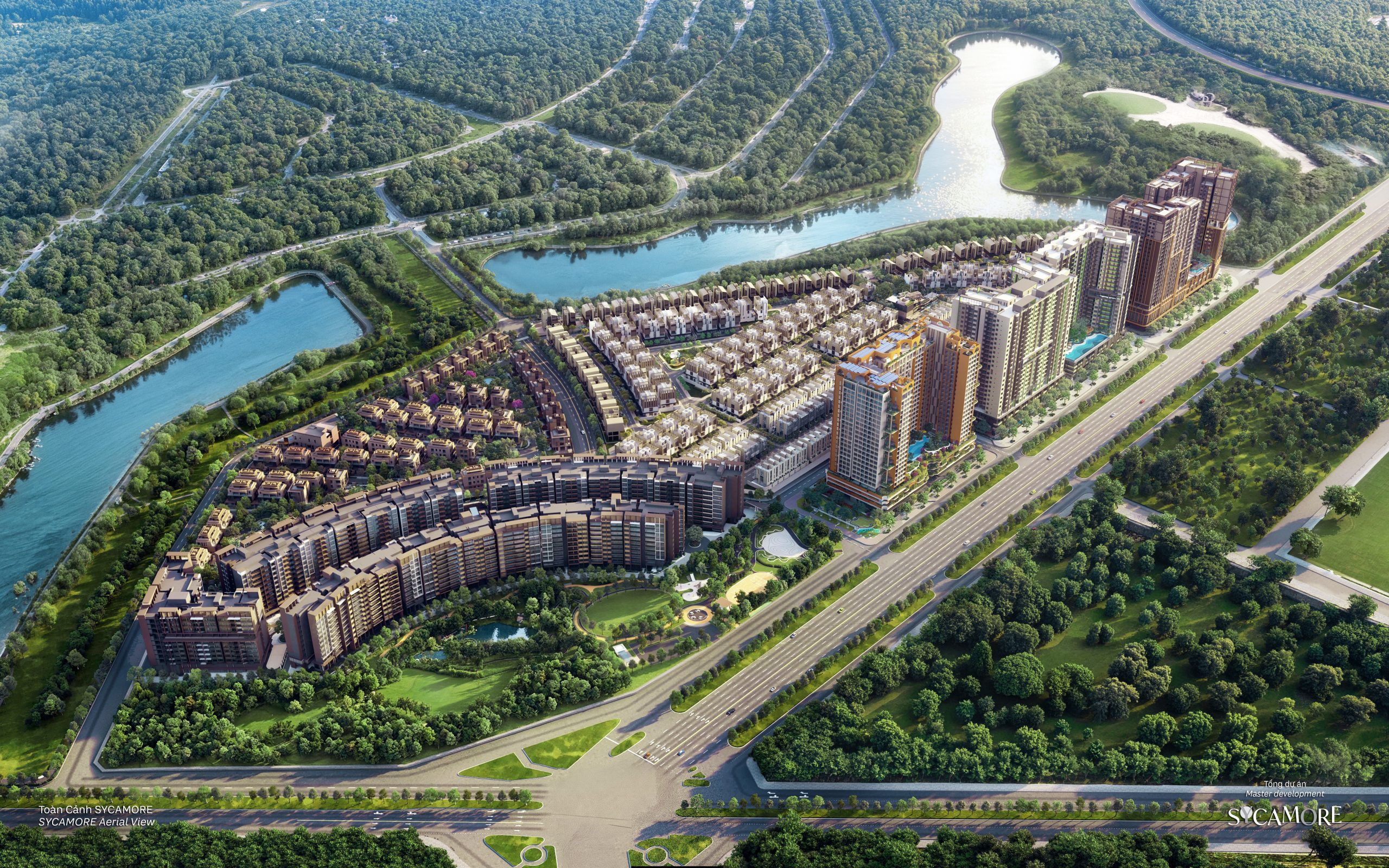
CapitaLand Development’s portfolio now includes 19,000 homes. Pictured is Sycamore, its large-scale residential project in Binh Duong province. PHOTO: CAPITALAND DEVELOPMENT
Many of these developers first entered Vietnam from the 1980s to the early 2000s, when the government was actively working to attract foreign direct investment.
CLD chief executive for Vietnam and international Tan Wee Hsien said the country’s sustained gross domestic product growth of around 6 to 7 per cent annually since the early 2000s, as well as a “youthful population” and expanding middle class, have created significant growth opportunities.
The country has drawn strong foreign direct investment over the past few decades amid an expanding urban economy, improving infrastructure and an increasingly well-educated workforce, noted a Mapletree spokesperson.
These “advantages” continue to attract multinational corporations and support the country’s growth as a manufacturing hub and consumer market.
More “quality” homes
Developers point to the residential sector as a key driver of growth, fuelled by Vietnam’s rising middle class and rapid urbanisation. By 2030, urbanisation is projected to surpass 50 per cent.
Tan said that CLD’s residential projects are primarily supported by strong demand from local homeowners and investors, with rising affluence and “evolving aspirations” among Vietnam’s middle class driving demand for premium housing.
At the same time, new supply remains limited while demand holds firm, supported by “developer-led financing schemes” amid rising mortgage rates, Knight Frank noted in a report.
This brought new home transactions to nearly 1,600 in Ho Chi Minh City in the first quarter of 2026, representing a year-on-year increase of 129 per cent.
Average asking prices in the city also continued their upward trajectory, rising 11.8 per cent year on year to US$378.9 per square foot in the quarter.
CLD said it is on track to meet its target of developing 30,000 homes in Vietnam by 2029, with another 11,000 homes in the coming years.
“To reach our goal… CLD will increase capital deployment and expand our development pipeline through strategic partnerships with reputable local and international partners,” said Tan. Planned large-scale projects will be located in key cities such as Hanoi and Ho Chi Minh City, and high-growth provinces including Hung Yen and Haiphong.
Frasers Property in February also announced a new joint venture with Gelex Group, one of Vietnam’s largest investment groups, to explore new development opportunities in Vietnam, including more residential projects.
Meanwhile, Keppel in 2020 launched the Keppel Vietnam Fund, a private fund that manages capital from global institutional investors and the group to co-invest in residential developments, as well as commercial and mixed-use projects and townships in the country.
Louis Lim, Keppel chief executive of real estate, noted that the fund has since invested in several “high-quality residential projects” in Hanoi and Ho Chi Minh City.
Lim said the fund, when fully leveraged and invested, including its co-investment capital, will potentially have funds under management of around S$1 billion.
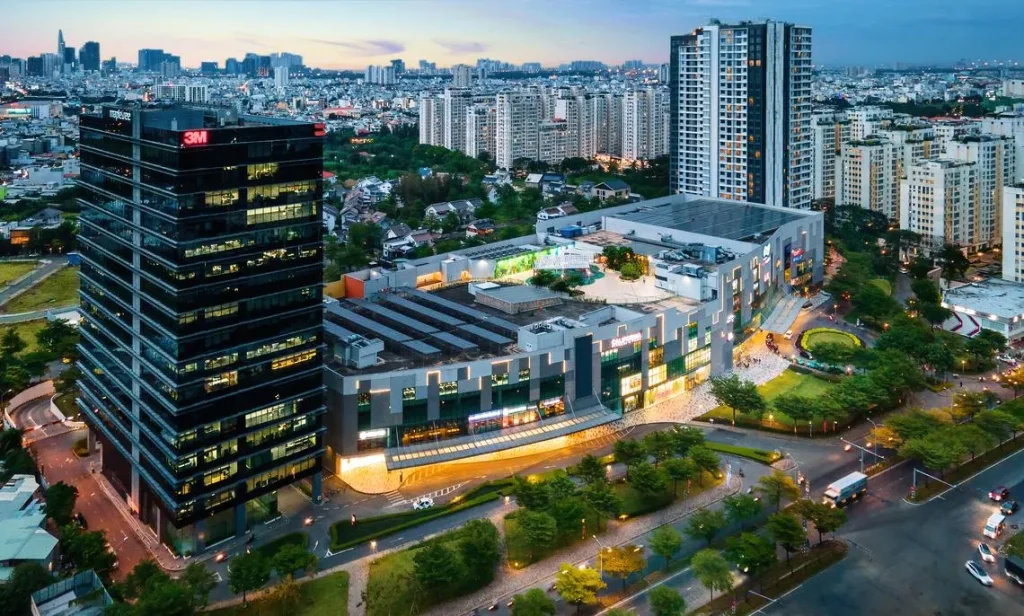
Saigon South Place in Ho Chi Minh City. Mapletree has grown its Vietnam portfolio to over 30 assets worth S$1.8 billion. PHOTO: MAPLETREE
Across other sectors
Beyond housing, real estate players are expanding into logistics, industrial and office properties to support Vietnam’s growing manufacturing and services sectors.
Patricia Goh, CapitaLand Investment’s (CLI) chief executive for South-east Asia and global head of logistics and self-storage, said the group’s industrial and logistics strategy in Vietnam is underpinned by continued manufacturing expansion, rapid supply chain diversification and e-commerce growth.
CLI is scaling its presence through regional fund platforms, such as the CapitaLand South-east Asia Logistics Fund, which develops purpose-built logistics and industrial facilities for multinational and domestic occupiers.
Mapletree added that demand for Grade A office space is expected to strengthen over the medium term in line with economic growth, although incoming supply in Ho Chi Minh City and Hanoi could create a more competitive market.
Developers are also investing in retail and hospitality as Vietnam’s consumer market and tourism sector grow.
Keppel, for instance, expanded into Hanoi’s retail market last year with the launch of Hanoi Centre. Lim said the mall now attracts nearly 40,000 visitors per day on weekends, with an average month-on-month footfall growth of 132 per cent.
CapitaLand likewise is expanding its lodging portfolio, with Goh noting “strong business and leisure demand” at the group’s various properties in Vietnam.
In early April, Frasers Property shared plans to open 18 new serviced and hotel residences across Asia, including Vietnam, by 2028. This includes the 401-room Fraser Residence Hinode City within a mixed-use development in Hanoi, which is expected to open by the end of 2026.

Fraser Suites Hanoi. Beyond housing, developers are also investing in retail and hospitality as Vietnam’s consumer market and tourism sector grow. PHOTO: FRASERS PROPERTY
The road ahead
Developers remain upbeat about Vietnam’s real estate outlook.
Tan expects continual enhancements to Vietnam’s regulatory environment to improve transparency and strengthen investor confidence, especially among foreign stakeholders.
In 2025, for example, new real estate business laws were introduced to provide more clarity and transparency in Vietnam’s real estate market. These include stricter regulations on property transactions such as clear guidelines on deposits, minimum investment requirements for investors and the provision of deferred payments.
Recent amendments to the country’s Land Law will reinforce Vietnam’s attractiveness for institutional real estate investment, said Goh. The reforms include adjustments to land prices and valuation policies, refining of the land lease regime and guidance on land expropriation and private agreement to directly acquire land.
Since some of these changes could increase competition, Keppel’s president for Vietnam real estate Joseph Low said in a 2024 conference that businesses must have strong financial resources, high technical capacity and rich experience, with “real” capacity through completed projects.
With its track record in Vietnam over the past three decades, Low had said the group was confident in its ability to “pivot challenges into opportunities”.
“We still pick Vietnam as one of our top countries to invest in,” he added.
Mapletree said that while recent geopolitical challenges and energy shocks have led to “flight disruptions and inflationary pressures” that might affect near-term growth, the country’s long-term prospects “remain intact”.
But even as opportunities grow, Tan said developers must remain nimble to “navigate a shifting regulatory landscape, supply chain volatility, external economic pressures, climate risks and evolving consumer expectations”.
This is part of an ongoing series examining the structural shifts and emerging drivers within Vietnam’s evolving economy